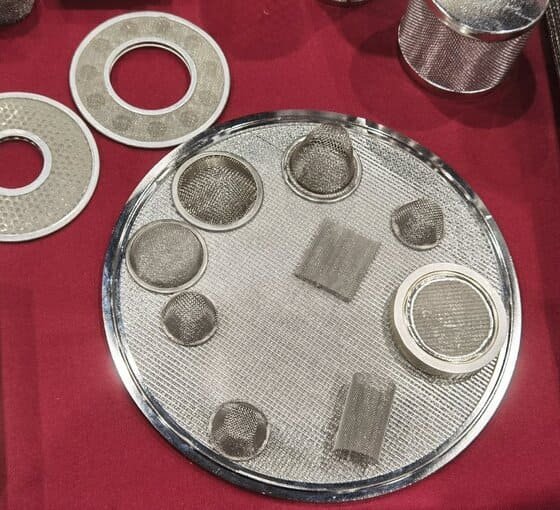
A sintered wire mesh element made to your drawing: a cylinder, a disc or a custom shape, with the layer stack chosen for the duty rather than the shape. Ratings 1–200 μm to 600 °C. Our engineers work from your drawing, OEM part number or a used element, and quote only after the drawing is approved.
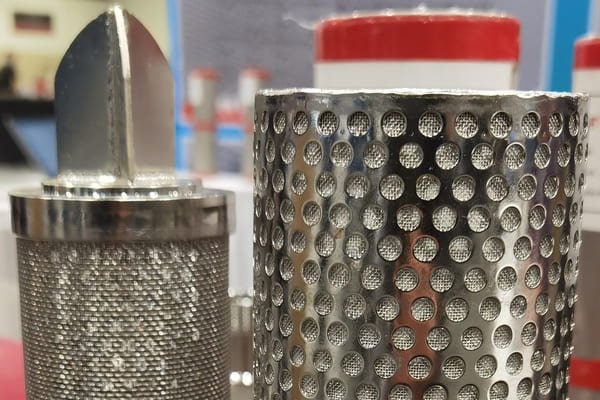
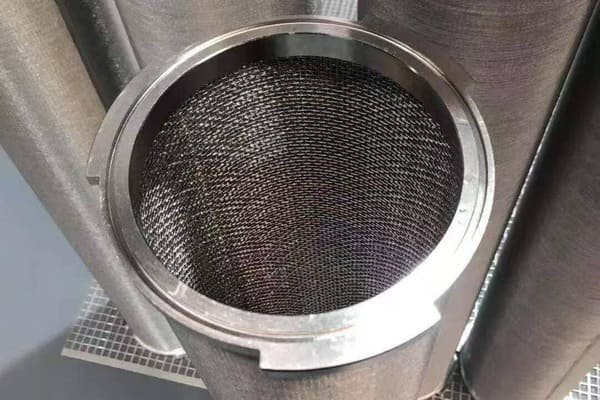
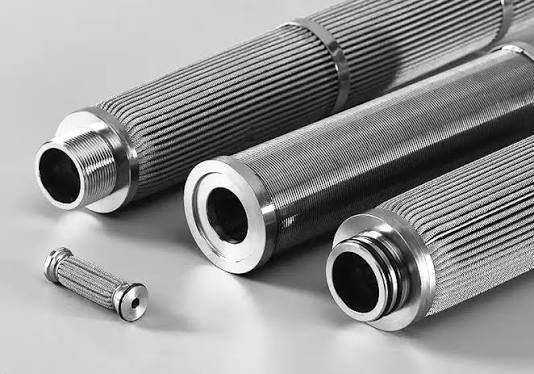
When the element is not a catalogue shape, it is built to a drawing. A sintered wire mesh element can be a cylinder, a disc or a shape drawn for the housing, and the layer stack is chosen for the duty rather than for the shape. Ratings run from 1 to 200 μm, in liquid and gas service up to 600 °C. The element is sintered into one rigid sheet and then formed to the shape the drawing calls for, so the aperture is set before the geometry and does not change when the part is shaped.
About 70% of the elements we make are replacements, ordered against an OEM part number, a drawing or a used part. Where the shape is unusual, a used element is often the fastest route: we measure it, name the layer stack that reproduces its behaviour and match the connection detail. The remaining 30% start from operating conditions, and our application engineers design the element from them. A stepped cylinder, a disc and a shape drawn for the housing are all built from the same sintered sheet, so the material behaviour is known before the shape is new.
Designing from the duty needs seven inputs: temperature and peaks, the medium and its corrosive constituents, working pressure and differential pressure, the contaminant and its particle size distribution, the rating you need with any bubble point or air permeability target, the flow rate and the number of elements per housing, and the geometry or OEM part number. Send what you have; we ask for the rest.
The process is fixed: we confirm the element can be made, then issue a drawing with tolerances and connection details for your approval, and only then quote. Drawing review takes 3–5 working days, samples ship in 20–30 days and production runs take 30–60 days, from a minimum of a few pieces to a few dozen. Forming and welding happen in our plant, and every batch is measured for bubble point and air permeability.